


Political documentaries have the power to shape opinions and spark conversations. They dive deep into pressing issues, unveiling the complexities of governance, social justice, and human rights. Through compelling storytelling and expert interviews, these films not only inform but also inspire viewers to engage with the world around them.
In an age where information is abundant yet often misleading, political documentaries serve as a beacon of truth. They challenge viewers to question the status quo and consider multiple perspectives. From historical events to contemporary struggles, these films illuminate the intricacies of power dynamics and the impact of policy on everyday lives. Whether one is a seasoned political junkie or a casual viewer, the insights gained from these documentaries can be both enlightening and transformative.
Overview of Political Documentaries
Political documentaries serve as powerful mediums that influence public opinion and encourage discussions on vital societal issues. They tackle topics related to governance, social justice, and human rights, presenting well-researched narratives and diverse viewpoints.
Definition and Importance
Political documentaries are non-fiction films that critically examine political systems, policies, and significant events, often aiming to raise awareness and spur action. These documentaries combine factual content with engaging storytelling to elucidate complex issues. Their importance lies in their ability to provide viewers with information that might be missing from mainstream narratives, fostering informed civic engagement and critical thinking. By highlighting underrepresented voices and stories, they empower audiences to question prevailing discourses.
Historical Context
Political documentaries emerged as a genre in the early 20th century, with films documenting social injustices and government corruption. Landmark works such as “The Plow That Broke the Plains” (1936) illustrated the impacts of the Great Depression and the Dust Bowl. Over the decades, documentaries like “Woodstock” (1970) and “The Fog of War” (2003) further exemplified the genre’s evolution, exploring themes of war, peace, and political activism. The rise of digital platforms has expanded access to political documentaries, allowing more viewers to engage with content that reflects contemporary societal dynamics.
Key Themes in Political Documentaries
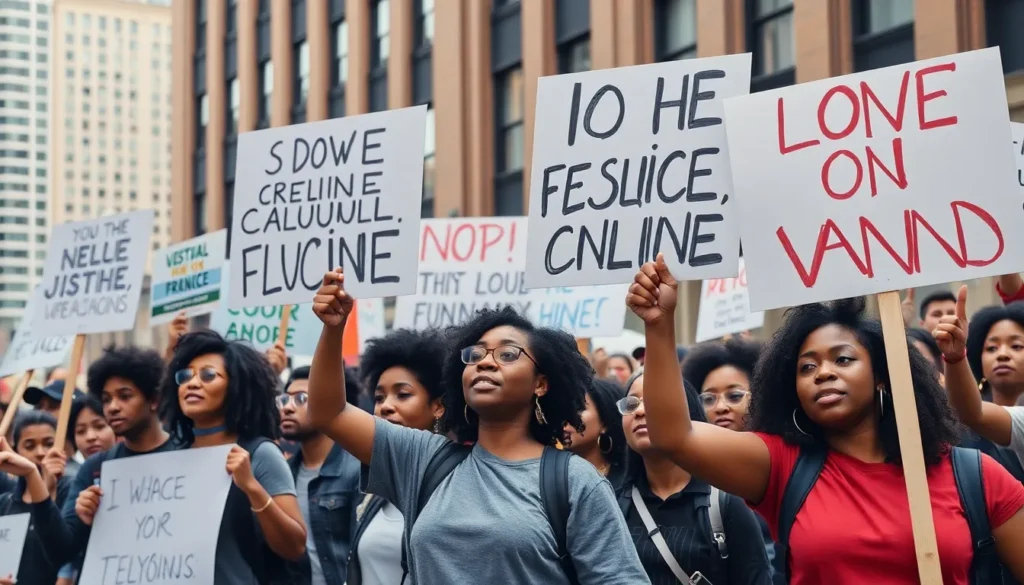
Political documentaries explore a variety of themes that reflect pressing societal issues. These narratives often provide insights into complex systems, stimulating thought and discussion among viewers.
Social Justice and Activism
Social justice and activism frequently serve as focal points in political documentaries. These films spotlight movements advocating for equality and human rights, featuring grassroots campaigns and leaders who challenge systemic oppression. For example, documentaries like 13th probe the intersection of race and the criminal justice system, igniting discussions on mass incarceration. Activism-related content not only documents struggles but also empowers audiences to consider their roles in fostering change.
Government Corruption and Scandals
Government corruption and scandals represent a critical theme in many political documentaries. These films investigate malfeasance and ethical violations within political systems, shedding light on accountability issues. Documentaries such as Inside Job analyze the financial crisis of 2008, exposing corporate greed and regulatory failures. By unraveling complex narratives, these documentaries encourage viewers to remain vigilant about transparency and ethics in governance.
War and Conflict
War and conflict form another significant theme in political documentaries. These films often examine the human cost of warfare and the socio-political ramifications of military actions. For instance, Restrepo follows soldiers in Afghanistan, providing an unfiltered look at the realities of combat. Such documentaries challenge viewers to confront the consequences of violence and engage in conversations about peace and diplomacy.
Notable Political Documentaries
Various political documentaries have significantly impacted public discourse. These films engage viewers by addressing pressing political issues and presenting critical narratives surrounding governance and societal justice.
Film Examples
| Title | Release Year | Key Themes |
|---|---|---|
| 13th | 2016 | Race, criminal justice, systemic inequality |
| Inside Job | 2010 | Financial corruption, government accountability |
| Restrepo | 2010 | War, combat realities, human cost of conflict |
| The Fog of War | 2003 | War decision-making, historical perspective |
| Food, Inc. | 2008 | Food industry, corporate influence, health |
| Citizenfour | 2014 | Surveillance, privacy rights, whistleblowing |
| Fahrenheit 9/11 | 2004 | War on terror, political manipulation |
These films exemplify the genre’s commitment to revealing truths behind significant political events and systems, prompting audiences to reflect critically on societal norms.
Directors and Their Styles
Directors of notable political documentaries often employ distinct stylistic choices to enhance storytelling.
- Ava DuVernay utilizes a blend of archival footage, expert interviews, and compelling narratives to drive home historical themes, as seen in 13th.
- Charles Ferguson focuses on investigative depth and clear analysis in Inside Job, emphasizing the need for accountability in financial systems.
- Sebastian Junger combines immersive storytelling with a raw portrayal of military life in Restrepo, capturing the experiences of soldiers in combat.
- Errol Morris employs a unique interview style, often blending personal reflection with overarching historical analysis, as showcased in The Fog of War.
These directors contribute significantly to the impact of political documentaries, shaping audience perceptions and inspiring critical conversations around political issues.
The Impact of Political Documentaries
Political documentaries play a crucial role in shaping public discourse and encouraging civic engagement. These films resonate deeply with audiences, fostering awareness about critical societal issues.
Viewer Engagement and Awareness
Political documentaries engage viewers by presenting complex topics in relatable formats. They often combine narrative storytelling with compelling visuals, which captures attention and stimulates emotional connections. Filmmakers utilize expert interviews, real-life testimonials, and archival footage, making the content relatable and impactful. For example, the documentary 13th effectively engages viewers by intertwining historical context with contemporary implications of systemic racism. This immersion not only heightens awareness but also prompts audiences to reflect on their roles within various social and political structures.
Influence on Public Opinion
Political documentaries influence public opinion by challenging dominant narratives and encouraging critical analysis. These films often address underreported issues, helping viewers to form educated opinions. For instance, Inside Job dissects the 2008 financial crisis, stirring skepticism about governmental oversight and corporate accountability. By presenting well-researched information alongside compelling arguments, political documentaries serve as catalysts for discussion. As viewers share insights and perspectives inspired by these films, they contribute to broader conversations about governance, rights, and justice. Consequently, political documentaries hold the power to shift perceptions and catalyze social change.
Political documentaries hold immense power in shaping societal views and encouraging meaningful discussions. By presenting complex issues in an engaging format, they inspire viewers to think critically about governance and social justice. These films not only inform but also challenge audiences to confront uncomfortable truths and consider diverse perspectives.
As access to these documentaries increases through digital platforms, their influence on public discourse continues to grow. They serve as essential tools for fostering civic engagement and promoting awareness of pressing issues. In a world where misinformation can easily spread, political documentaries remain vital in guiding individuals toward informed opinions and actions.