
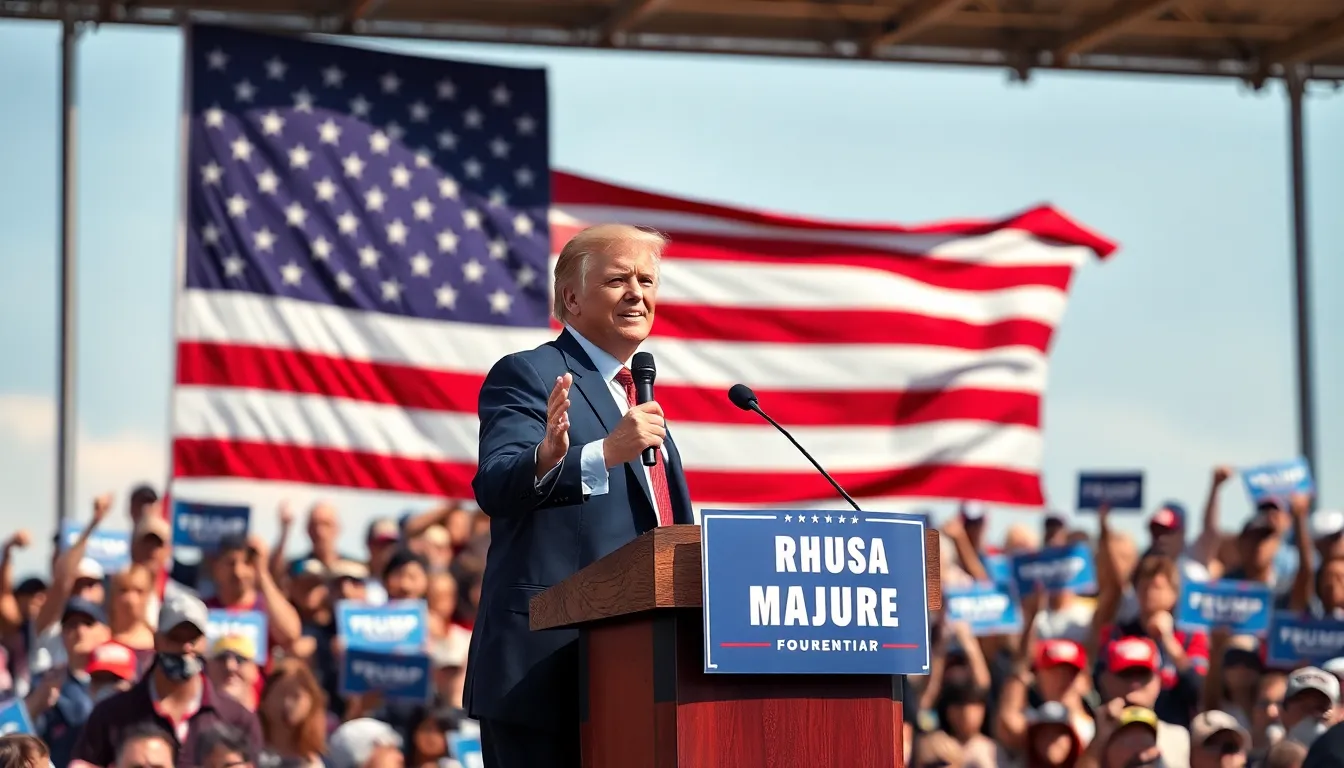

Political rhetoric shapes the landscape of public discourse, influencing opinions and swaying voters. It’s not just about what leaders say; it’s about how they say it. From fiery speeches to carefully crafted messages, rhetoric plays a crucial role in the way political ideas are communicated and received.
In an age where information spreads rapidly, understanding the power of political rhetoric is more important than ever. It can rally support, ignite controversy, or even deflate a rival’s standing. As politicians harness the art of persuasion, they tap into emotions, values, and beliefs that resonate deeply with their audience. This article explores the nuances of political rhetoric, its historical significance, and its impact on contemporary politics.
Understanding Political Rhetoric
Political rhetoric shapes public conversations and influences voter perceptions. It’s essential to grasp how messages are crafted and delivered to fully appreciate their impact.
Definition and Importance
Political rhetoric refers to the use of language by politicians to persuade, inform, or mobilize the public. Its importance lies in its ability to frame issues, generate emotional responses, and alter public opinion. Effective political rhetoric not only conveys a message but also enhances a leader’s credibility, creates a sense of urgency, and fosters community among supporters. When leaders articulate values or grievances, they connect emotionally, guiding voters towards specific actions or beliefs.
Historical Context
Political rhetoric has deep roots in history, evolving through various cultural and social contexts. Ancient Greece and Rome laid foundational principles for persuasive speech, prominently showcased in the works of philosophers like Aristotle. Shakespeare and other playwrights also contributed to the art of rhetoric by illustrating its power in political contexts. In modern times, political rhetoric adapted alongside technological advancements, with speeches, debates, and advertisements playing critical roles in campaigns. The rise of social media further transformed rhetoric, requiring concise, impactful messaging to capture attention in a crowded digital landscape.
Elements of Political Rhetoric
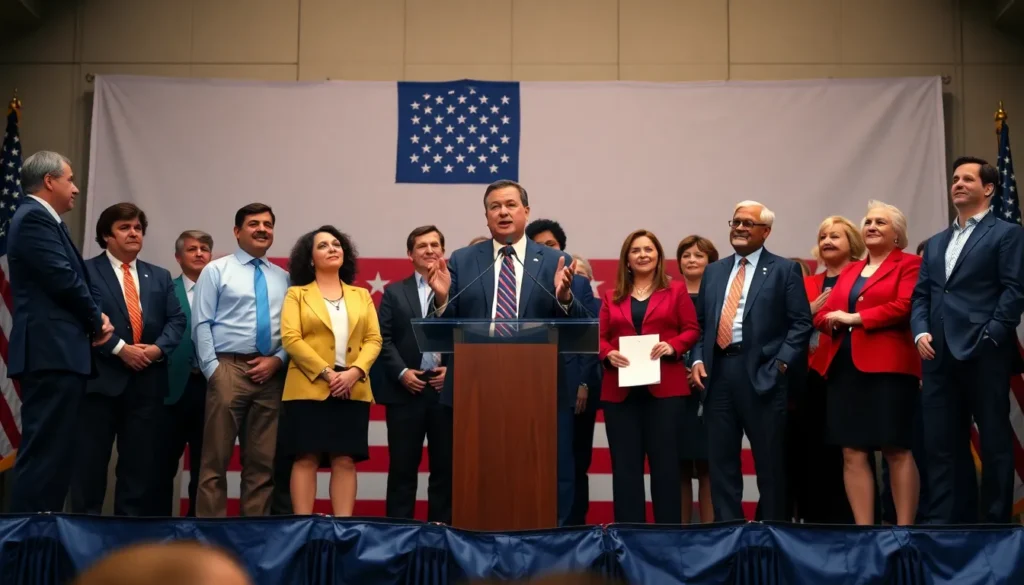
Political rhetoric comprises various elements that enhance its effectiveness in persuading and mobilizing audiences. Key components such as ethos, pathos, logos, language, and style play vital roles in shaping political messages.
Ethos, Pathos, and Logos
Ethos establishes credibility. Politicians build trust and authority through their experiences and values. For example, a leader may reference their background in public service to connect with voters.
Pathos appeals to emotions. Politicians evoke feelings to generate empathy or urgency. A candidate might share personal stories or depict compelling scenarios to resonate with an audience’s values and concerns.
Logos refers to logical reasoning. Politicians use facts, statistics, and logical arguments to support claims. For instance, citing unemployment rates or economic growth statistics can strengthen an argument for policy changes.
Language and Style
Language influences the perception of political messages. Politicians choose specific vocabulary and phrasing to evoke desired reactions. Use of concise, powerful words can instill confidence, while rhetorical questions might provoke thought and engagement.
Style shapes the tone and rhythm of delivery. The use of metaphors, similes, and anecdotes can create vivid imagery and enhance relatability. Furthermore, repetition of key phrases reinforces central themes, ensuring messages resonate with audiences.
Techniques Used in Political Rhetoric
Political rhetoric employs various techniques to enhance persuasive effectiveness and connect with audiences. These methods include persuasive strategies and emotional appeals, both crucial in shaping public opinion.
Persuasive Strategies
- Repetition strengthens key messages by reinforcing them through multiple mentions, creating familiarity and impact.
- Analogy draws comparisons between different ideas, simplifying complex issues and making them relatable for the audience.
- Imperative Language commands attention, urging action and creating a sense of urgency that motivates listeners to engage.
- Inclusive Language fosters a sense of community and belonging, using terms like “we” and “us” to unite audiences around shared goals.
- Counterarguments address opposing views, demonstrating an understanding of differing perspectives while solidifying the speaker’s position.
Emotional Appeals
- Fear Appeals invoke concern about potential negative outcomes, prompting audiences to take action to avoid these fears.
- Empathy connects with personal stories or testimonies, making issues relatable on an emotional level and encouraging support.
- Patriotism utilizes national symbols or references, instilling pride and motivating voters to protect their country’s values.
- Anecdotes share personal experiences that create a narrative, making political messages more engaging and memorable.
- Humor lightens discourse, making politicians appear more approachable while fostering a positive emotional response.
These techniques enhance the effectiveness of political rhetoric, enabling politicians to resonate with their audiences and influence opinions.
Impact of Political Rhetoric
Political rhetoric significantly influences public opinion and plays a crucial role in elections. Understanding its effects helps illuminate how messages shape political landscapes.
Influence on Public Opinion
Political rhetoric shapes public opinion by framing issues and influencing perceptions. Rhetorical strategies that evoke emotional responses can alter opinions quickly. For instance, effective use of pathos, including stories or vivid imagery, engages emotions and encourages individuals to align with specific viewpoints. Research indicates that emotionally charged messages can lead to lasting changes in attitudes and beliefs (Pew Research Center, 2020). Specific examples include political speeches that evoke fear of external threats or the promise of social prosperity. These emotional appeals not only resonate deeply with voters but also drive discussions around critical topics.
Role in Elections
In elections, political rhetoric becomes a powerful tool for candidates to mobilize support. Messaging strategies characterized by ethos, pathos, and logos determine a candidate’s appeal. Candidates often deploy slogan repetition to enhance recognition and support during campaigns, reinforcing their core messages. For example, phrases like “Make America Great Again” illustrate how concise slogans encapsulate political visions and motivate voter engagement. Additionally, debates provide a platform for candidates to showcase rhetorical skills directly, impacting voter perceptions in real-time. Studies demonstrate that strong rhetorical performances during televised debates can lead to significant shifts in voter preferences (American Political Science Review, 2021). Thus, the effectiveness of candidates’ rhetorical approaches can ultimately determine election outcomes.
Political rhetoric remains a powerful tool in the realm of governance and public engagement. Its ability to shape narratives and influence opinions cannot be overstated. As political landscapes evolve with technology and social media, the importance of mastering rhetorical skills becomes even more pronounced.
Leaders who effectively harness the elements of rhetoric can connect deeply with their audiences and drive meaningful discourse. Understanding these dynamics not only enhances political communication but also empowers citizens to critically evaluate the messages they encounter. In this ever-changing environment, the impact of rhetoric will continue to play a crucial role in shaping democratic processes and public perception.